
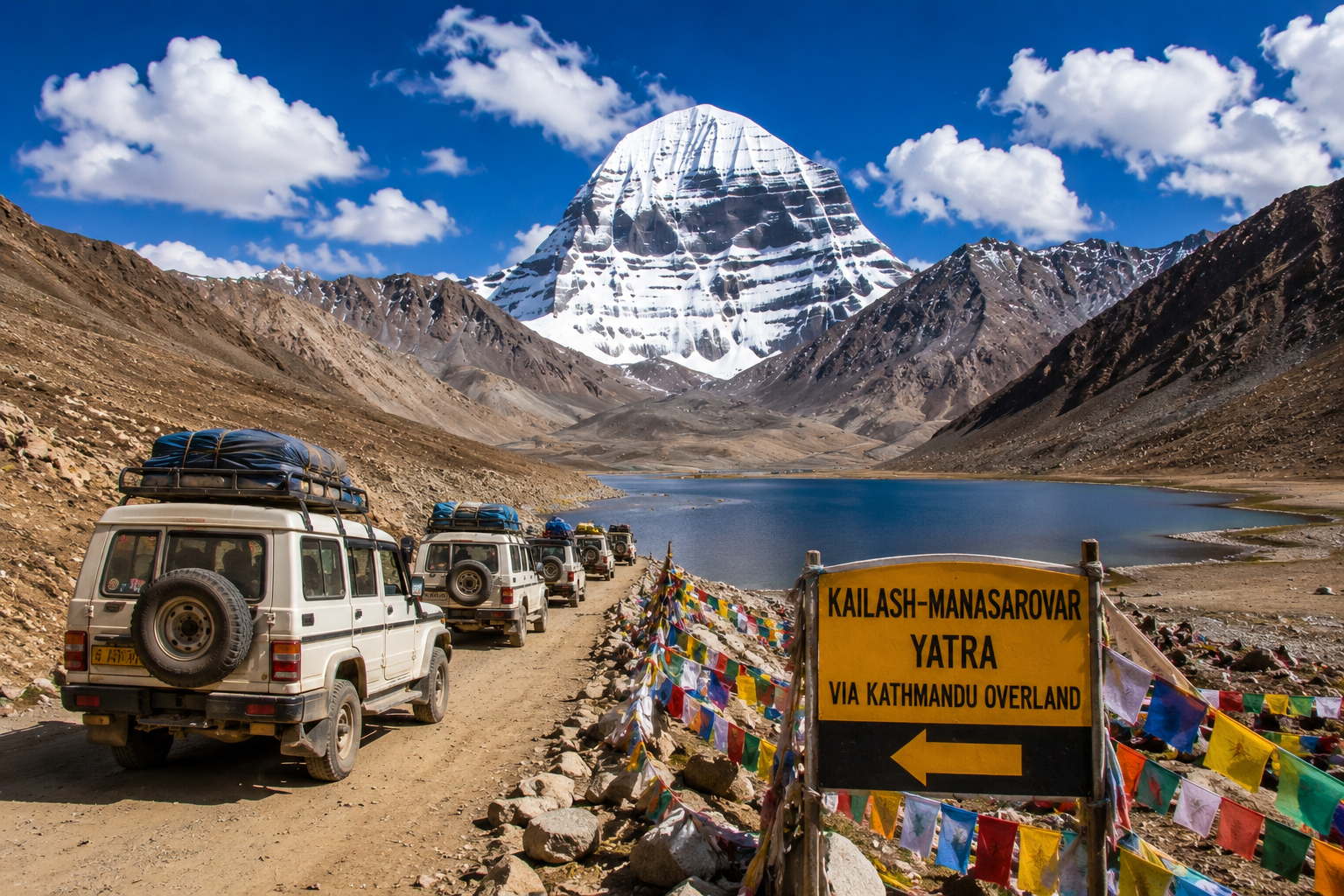
Every year, thousands of devotees from India aspire to undertake the sacred Kailash Mansarovar Yatra, but planning the journey can be confusing. Questions about where to register, which portal to use, eligibility requirements, required documents, permits, routes, and the overall Kailash Mansarovar Yatra cost are common among first-time pilgrims.
The registration process can also vary depending on whether you are applying through an official government-organised route or booking a journey through a private tour operator. Understanding the correct process in advance can help you avoid unnecessary delays, incomplete applications, and unexpected expenses.
In this comprehensive guide, we explain the Kailash Mansarovar Yatra 2026 registration process, important eligibility requirements, documents, expected expenses, available routes, and key preparation tips. Whether you are planning to apply through the official government process or exploring a private Kailash Mansarovar tour package, this guide will help you understand the journey from registration to departure.
Important: Registration rules, dates, eligibility criteria, permits, routes, and fees can change from year to year. Always verify the latest requirements with the relevant government authorities or your authorised tour operator before making travel or payment decisions.
What Makes Kailash Mansarovar Yatra 2026 Special?
For many devotees, 2026 holds particular spiritual significance because it is associated with the Year of the Horse in the Tibetan calendar. Mount Kailash has deep religious importance in Hinduism, Buddhism, Jainism, and Bon traditions, and the practice of completing a pilgrimage circuit, or parikrama/kora, around the sacred mountain is central to the spiritual journey.
The Horse Year occurs once every 12 years, and many pilgrims consider it an especially auspicious period to undertake the Kailash parikrama. Traditional Tibetan Buddhist beliefs associate the Horse Year with increased spiritual merit for completing the kora.
However, claims that a single parikrama during the Horse Year is exactly equivalent to thirteen parikramas in other years are best presented as a traditional religious belief, rather than as a universally established fact.
For pilgrims who have been planning their Kailash Mansarovar Yatra registration, this makes 2026 an important year to consider. Because the journey involves high-altitude travel, permits, medical requirements, transportation, and advance planning, starting preparations early can make the overall process considerably smoother.
Kailash Mansarovar Yatra Registration: Routes & Booking Process
| Factor | MEA Government Route (kmy.gov.in) | Private Operator Route (Nepal) |
| Registration | kmy.gov.in (official portal) | Operator website / office |
| Visa Handling | MEA (Govt. of India) | Private tour operator |
| Selection Process | Lottery + eligibility | First-come, first-served |
| Registration Window | Jan–Mar | Open year-round (May–Sept) |
| Cost | Lower (subsidised) | Higher (from ~₹2.35L+) |
| Duration | 21–25 days | 9–16 days |
| Flexibility | Fixed batches | Flexible dates |
| Best For | Budget / traditional pilgrims | Flexible / faster travel |
Kailash Mansarovar Yatra Registration Through the Official MEA Portal
For pilgrims applying through the Government of India’s Kailash Mansarovar Yatra, the official application process is managed through the Ministry of External Affairs (MEA) and its dedicated KMY portal, kmy.gov.in. The government-organised Yatra is conducted through two routes: Lipulekh Pass in Uttarakhand and Nathu La Pass in Sikkim.
The online application requires eligible Indian citizens to provide accurate personal and passport information, upload the specified documents, select their route preferences, and complete the subsequent selection and medical formalities.
If you are planning to apply for a future Kailash Mansarovar Yatra, the following step-by-step process explains how the official registration works.
Step 1: Check Your Eligibility and Registration Dates
Before starting your application, check the latest eligibility criteria and registration schedule on kmy.gov.in.
For the 2026 Yatra, the official portal specified that applicants must be Indian citizens, hold a valid Indian passport, be between 18 and 70 years of age, meet the prescribed BMI requirement, and be physically and medically fit for the high-altitude journey. The passport must also meet the validity requirement specified by the MEA.
The registration deadline can change every year. For 2026, the official portal listed 19 May 2026 as the last date for online applications, and the registration status is currently shown as closed.
Tip: Always check the official KMY portal for the current year’s opening date, closing date, eligibility rules, and application instructions rather than relying on dates from previous years.
Step 2: Create Your Account on kmy.gov.in
Once registration is open, visit kmy.gov.in and select the option to register as a new user.
You will need to provide the information requested by the portal and create your login credentials. Keep your passport and other relevant information available while creating the account so that the details entered in the application remain accurate.
The KMY portal specifically states that applicants are responsible for entering complete and correct information, including details such as their name and date of birth. Incorrect or false information can result in disqualification.
Step 3: Complete the Online Application Form
After registering your account, complete the online KMY application form.
The application requires accurate personal and travel information. Applicants must also indicate their preferred order for the two available routes:
- Route 1 – Lipulekh Pass, Uttarakhand
- Route 2 – Nathu La Pass, Sikkim
The 2026 application instructions also allowed applicants to select their preferred endpoint for the return journey:
- Lipulekh route: Dharchula or Delhi
- Nathu La route: Gangtok or Delhi
Review every field carefully before submitting the form. The MEA states that incorrect or false information can lead to disqualification, including after selection.
Step 4: Prepare and Upload the Required Documents
Before submitting your application, prepare the documents according to the specifications provided on the official KMY portal.
For the 2026 application, the portal specifically requested:
- A recent passport-size photograph in JPG format, not exceeding 300 KB
- A scanned copy of the passport page containing the applicant’s photograph and personal details
- The passport’s last page containing family details, combined in PDF format, not exceeding 500 KB
- The required documents of the accompanying applicant if two people are applying to travel together
The exact document requirements and file specifications may be updated for future Yatra seasons. Therefore, applicants should always follow the instructions displayed on the official portal when registration opens.
Step 5: Submit the Application and Keep a Copy
After completing all mandatory fields and uploading the required documents, carefully review the application before submitting it.
Once the application has been successfully submitted, the official portal instructs applicants to take a printout of the application form and keep it for future reference. Applicants also receive confirmation through SMS and email after successful submission.
The portal also states that a maximum of two registration forms can be submitted through one user account when two applicants wish to travel together in the same batch.
Step 6: Wait for the Computerized Selection Process
Submitting an application does not automatically guarantee a place on the Yatra.
The MEA uses a computerized draw of lots to select applicants. Selected pilgrims are notified through automated messages sent to their registered email address and mobile number. Applicants can also check status updates through the official KMY helpline.
The official eligibility information also notes that first-time applicants are given priority over people who have previously participated in a Ministry-organised Kailash Mansarovar Yatra, subject to the applicable rules.
Step 7: Complete the Mandatory Medical Examination
Selection through the draw is only one stage of the process. Because the Kailash Mansarovar Yatra involves demanding high-altitude travel, selected pilgrims must meet the prescribed medical and fitness requirements.
For the 2026 process, selected applicants were required to undergo specified medical examinations, including examinations conducted by the Delhi Heart and Lung Institute (DHLI) and the ITBP Base Hospital in New Delhi for high-altitude endurance.
Pilgrims who are found medically unfit at the required stage are not permitted to continue with the Yatra. Therefore, medical clearance is an essential part of the government-organised pilgrimage.
Step 8: Complete Passport, Visa and Other Travel Formalities
After selection and medical clearance, pilgrims must complete the travel formalities specified by the MEA for their assigned batch.
The official 2026 itineraries show that pilgrims report to Delhi before departure and complete activities such as medical examinations, passport and visa-related formalities, MEA briefing, fee payments, and other required arrangements before beginning the onward journey.
The exact sequence of these activities can vary according to the assigned route and batch. Selected pilgrims should therefore follow the instructions and schedule issued by the MEA rather than relying on information from an earlier Yatra season.
Private Kailash Mansarovar Yatra Registration & Booking Process
Pilgrims who prefer greater flexibility in travel dates, itinerary options, and package arrangements may choose to book their Kailash Mansarovar Yatra through a private tour operator. This option is also considered by travellers who are not selected for the Government of India’s MEA-organised Yatra.
Many private operators organise Kailash Mansarovar Yatra packages through Nepal, with Kathmandu serving as the primary starting point before travelling towards the Tibet Autonomous Region. Depending on the package, the journey may include transportation, accommodation, permits, meals, guides, and other on-ground arrangements.
How Private Operator Booking Works
The exact procedure varies between operators, but a typical private Kailash Mansarovar Yatra booking follows these steps:
- Choose a reliable tour operator: Research the operator’s experience, registrations or accreditations, customer reviews, itinerary, inclusions, and terms and conditions before making a booking.
- Select your Yatra package and travel date: Compare available departure dates, route options, accommodation, transportation arrangements, duration, and package inclusions.
- Submit the required documents: Operators generally request a valid passport, photographs, medical or fitness documents, and completed forms required for the pilgrimage and permit process.
- Pay the booking amount: Once you have selected a package, the operator will provide its payment schedule and booking terms. The required advance amount varies between operators.
- Complete visa and permit formalities: The operator coordinates the required group travel, visa, and Tibet permit procedures according to the applicable regulations and your selected itinerary.
- Travel to Kathmandu: Most Nepal-based itineraries begin in Kathmandu, where pilgrims complete briefings, documentation, medical checks, and other pre-departure formalities as required by the operator.
- Proceed towards the Tibet border: After the required permits and travel arrangements are completed, the group travels towards the designated border crossing and continues into Tibet according to the approved itinerary.
What Is Usually Included in a Private Kailash Mansarovar Package?
Package inclusions differ significantly between operators. Before booking, ask for a written breakdown covering:
- Airport transfers and local transportation
- Kathmandu accommodation
- Transportation between Kathmandu and the Tibet border
- Tibet Travel Permit and other applicable permits
- Accommodation during the Yatra
- Meals mentioned in the itinerary
- Experienced guides and support staff
- Porter or luggage services, if included
- Oxygen and basic first-aid support
- Emergency assistance and evacuation arrangements
- Government fees, visa-related charges, and other applicable costs
Never assume that an item is included simply because it appears in an operator’s promotional package. Confirm the inclusions and exclusions in writing before making payment.
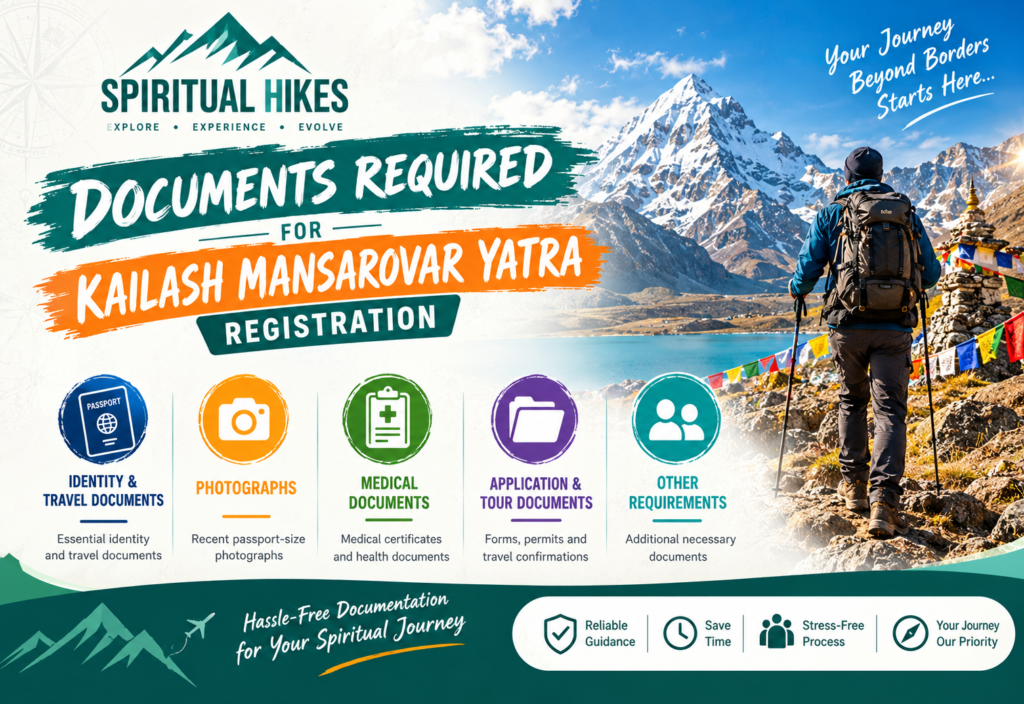
Documents Required for Kailash Mansarovar Yatra Registration
Whether you register via the kmyg ov in portal or through a private operator, the core documents required are largely the same. Prepare these well in advance last-minute document collection is the most common reason for missed deadlines.
Identity and Travel Documents
- Original Indian passport — minimum 6 months validity from your planned date of travel into Tibet
- At least 2 to 3 blank pages in your passport for visa stamps and border entry/exit endorsements
- Photocopies of the biographical data page — carry at least 5 sets
- Aadhaar Card or Voter ID as secondary identity proof
Photographs
- Minimum 6 recent passport-size photographs — white background, 35mm x 45mm format
- Some operators and the MEA portal may request up to 8 photographs — always carry extras
Medical Documents
- Medical fitness certificate from a registered doctor — must explicitly confirm fitness for high-altitude trekking above 5,000 metres
- For the MEA route: certificate must be from a government-designated medical centre
- Blood group documentation
- Doctor’s letter if you are on any regular medication
- Travel insurance covering high-altitude trekking and emergency medical evacuation — required by most operators, strongly recommended for all
Application and Tour Documents
- Completed Chinese Group Visa application form — prepared and submitted by your operator
- Tibet Travel Permit application form — completed by your operator in Kathmandu
- Confirmed flight tickets to Kathmandu (for Nepal route) or confirmed itinerary for MEA route
- Accommodation confirmation for Kathmandu stay
- Emergency contact and next-of-kin details

What Is Included in a Kailash Mansarovar Yatra Package?
Understanding what is included in a Kailash Mansarovar Yatra package makes it easier to compare tour operators and estimate your total travel budget. Package inclusions can vary considerably depending on the operator, route, duration, accommodation category, and services selected.
Before making a booking, always ask for a detailed itinerary and written list of inclusions and exclusions. A typical private package may include the following services.
Typically Included in the Package
- Visa and permit assistance: Processing and coordination for the required China/Tibet travel documentation, subject to the applicable regulations.
- Accommodation: Hotels in Kathmandu and other overnight locations, along with guesthouses or camps during the Tibet portion of the journey, depending on the itinerary.
- Meals: Meals specified in the tour itinerary, often including vegetarian options suitable for pilgrims.
- Transportation: Scheduled road transfers and local transportation included in the package itinerary.
- Tour guides and support staff: Local guides, group coordinators, and tour managers, depending on the operator.
- Oxygen and first-aid support: Many operators provide emergency oxygen and basic first-aid facilities because the Yatra involves travel at high altitude.
- Required permits: Applicable permits and documentation needed for the destinations included in the itinerary.
- Pre-Yatra arrangements: Depending on the package, this may include briefings, document assistance, local transfers, and other preparatory services.
What Is Usually Not Included?
Certain expenses are commonly charged separately from the advertised package price. These may include:
- International or domestic flights to and from the starting city
- Nepal visa or other applicable entry charges, where relevant
- Personal travel and medical insurance
- Porter, horse, or yak charges for personal luggage, where applicable
- Personal expenses, shopping, laundry, and additional meals
- Tips and gratuities for guides, drivers, and support staff
- Additional accommodation caused by delays or itinerary changes
- Emergency evacuation or medical expenses not covered by the package or insurance
Tip: Do not compare packages based only on the headline price. Check exactly what is included, what is excluded, and whether additional permit, transportation, accommodation, or service charges may apply.
Eligibility Criteria for Kailash Mansarovar Yatra
Eligibility requirements depend on the route and the organisation conducting the Yatra. The Government of India’s MEA-organised Kailash Mansarovar Yatra has specific eligibility and medical requirements, while private operators may have their own requirements for travellers using alternative itineraries.
For the government-organised Yatra, applicants should carefully review the latest requirements published by the MEA before applying.
Important factors may include:
- Nationality: Eligibility for the MEA programme is subject to the citizenship requirements specified by the Government of India.
- Age: The applicable age limit is determined by the MEA for the relevant Yatra season.
- Passport: Travellers must hold a valid passport meeting the validity requirements specified for the journey.
- Medical fitness: Pilgrims must meet the prescribed medical and physical fitness requirements because the journey involves extremely high-altitude conditions.
- Travel documentation: Additional forms, photographs, permits, and other documents may be required depending on the route and travel arrangements.
- Visa and permit requirements: Travellers must satisfy the applicable Chinese/Tibetan visa and permit requirements for their chosen itinerary.
Important Note About Medical Eligibility
Kailash Mansarovar is a high-altitude pilgrimage, and parts of the journey involve elevations of more than 5,000 metres. Physical preparation and medical fitness are therefore extremely important.
Do not rely on a general list of medical conditions found online to determine your eligibility. Medical requirements can differ between government and private programmes. Obtain professional medical advice and follow the medical screening requirements specified by the relevant authorities or tour operator.
When Should You Register for Kailash Mansarovar Yatra?
Early planning is strongly recommended because the Yatra involves passport requirements, permits, medical preparation, transportation, accommodation, and limited group departures.
The ideal planning timeline depends on whether you are applying through the government programme or booking a private tour.
Suggested Planning Timeline for the MEA Programme
Several months before registration
- Check your passport validity.
- Review the latest eligibility requirements.
- Begin appropriate physical preparation.
- Consult your doctor about high-altitude travel if required.
When registration opens
- Visit the official KMY portal.
- Review the current application instructions.
- Complete the online application accurately.
- Upload documents according to the specified format and size.
After selection
- Follow the MEA instructions for medical examinations.
- Complete the required payments and documentation.
- Follow the assigned batch schedule and reporting instructions.
Before departure
- Complete the required travel formalities.
- Attend the prescribed briefings.
- Prepare appropriate clothing, medication, personal equipment, and other essentials.
Important: Do not use previous years’ registration dates as a fixed schedule. The MEA can change the application window, selection process, medical requirements, fees, and travel arrangements each year.
Suggested Planning Timeline for Private Operators
If you are travelling through a private operator, consider starting your preparations several months before your preferred departure date.
4–6 months before travel
- Research and compare tour operators.
- Compare routes, dates, itineraries, accommodation, and package prices.
- Check passport validity and other documentation.
- Start physical preparation.
2–4 months before travel
- Confirm your preferred departure date.
- Review the complete package inclusions and exclusions.
- Make the required booking payment.
- Submit the documents requested by the operator.
4–8 weeks before travel
- Confirm visa and permit arrangements with the operator.
- Purchase appropriate travel insurance.
- Finalise flights and other transportation arrangements.
- Review the detailed itinerary and emergency procedures.
Before departure
- Confirm reporting time and location.
- Keep original documents and copies safely organised.
- Check luggage requirements and high-altitude equipment.
- Stay in contact with the operator regarding any last-minute changes.
Conclusion: Plan Your Kailash Mansarovar Yatra Carefully
The Kailash Mansarovar Yatra registration and booking process may initially seem complicated because it involves multiple stages, documents, medical requirements, permits, travel arrangements, and costs. However, careful planning can make the process much easier to manage.
Start by deciding whether the MEA-organised Yatra or a private tour package is more suitable for your circumstances. Then verify your eligibility, check your passport and documents, compare routes and packages, understand the complete cost, and confirm the latest requirements before making your booking.
If you are planning your journey for 2026 or a future Yatra season, always verify dates, eligibility criteria, fees, permits, and travel requirements through the relevant official authorities or your chosen tour operator. Most importantly, choose an experienced operator with transparent pricing and clear safety and emergency-support arrangements.
A well-planned Kailash Mansarovar Yatra is not just about reaching the destination—it is about preparing responsibly for the journey.
